
Melina Manolas
A Reflection on my Urban Semester
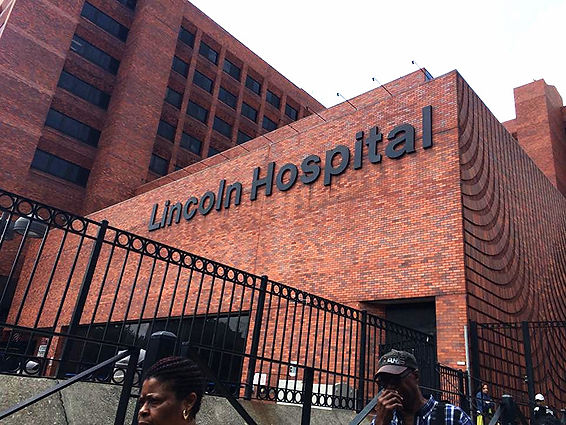
Rotations at Lincoln Hospital in the South Bronx
Rotation in the Neonatal Intensive Care Unit
The first thing that stood out to me was the prevalence of art in the NICU. Every wall is covered in a colorful mural displaying nature. The art brightened the typically institutional feel of the hospital and distracted from the flourescent lighting and white-washed walls. I noticed that it brought vibrancy, color, and optimism not just to the pediatric patients and the families of neonates, but also to the physicians. I believe that art has a place in hospital design and in healing, and not just in the Pediatric or ICU setting. It was refreshing to see the literature on the impact of art on recovery being applied in the real hospital setting.
In the Neonatal ICU, I was exposed to the role of physician as mentor, teacher, and leader, by following daily rounds with the attending Dr. Bainbridge and director of neonataology, Dr. Rajegowda. The physicians taught me how to use the facial expressions and body language of the mothers in order to discern their feelings that day about the health of their neonate. Dr. Bainbridge made sure to teach me how practicing medicine is as much about developing relationships with people and judging their emotional wellbeing as it is about the biology. I developed my self-agency by asking questions during rounds and attending pediatric conferences about issues such as congenital HIV and patent ductus arteriosus. Speaking frequently with the Pediatric residents about their schedules and lifestyle painted a picture of the rigorous training, hours, and dedication that go into the intern and residency years.
I learned a great deal not just about the fascinating practice of neonatology, but also about the social responsibility and awareness embedded within it. The context outside of the patient beyond the walls of the hospital was always taken into account. The physicians openly acknowledged their responsibility to the physical health of the baby and to assure that the baby will be placed in a home where it will be parented properly with nurture and love. In the presentation of the patient’s background and vitals during rounds, the physicians also mention the social context of the patient- they discuss the baby’s prenatal care and predict the quality of the baby’s future care at home. They make note if the mother used drugs or consumed alcohol during pregnancy, which is often the case at Lincoln, and must consider the implications of continued use on the level of parenting they can provide. The regularly correspond with social services. Additionally, each major hallway held a framed "Parents' Bill of Rights", demonstrating the hospital's respect for the family's will in the NICU.
I believe that such transparency in medical communication is both useful and necessary, especially in departments like the NICU where at-risk newborns do not yet have the voice or capacity to be advocates for their own health and wellbeing. This concept is at the center of what Edgar Schien terms the “value clusters”; the physicians’ decision to spend their time and energy this way means that they highly value the social responsibility they have to the neonates, just as much as they value the science.


Rotation in the Pediatric Clinic
I learned quickly how many families in the South Bronx use the clinic as the line of first defense for their children, because they lack primary care physicians. The clinic exposed me to a variety of health issues through pediatric nephrology consultations with Dr. Prosper as well as well-child visits or "checkups" - they ranged from nephritic syndrome to jaundice to untreated infections to Down syndrome babies presenting with heart murmurs, and an even larger variety of social contexts. I recognized how drastically different medicine can be in its application to a child versus an adult, not just in the science but also in the demeanor, approach, and communication with the patient. I took note of how the types of questions the pediatrician asks the child shifts as the age goes from five to twelve to seventeen, in accordance with their changing physical and social environments.
I now believe a physician should know how to be a patient in his own exam room, to put himself in the shoes of the patient in order to feel empathy and provide them with comfort, not just a biomedical fix. Only then can a mutually enriching relationship evolve. Above all, I have learned how a hospital cannot care for its local patients without knowing the social and political history of the community in which it finds itself to be a part, and neither can individual physicians.I appreciated Dr. Prosper's emphasis on the health problems that are most relevant to the South Bronx - asthma, obesity, and diabetes. I learned how to write asthma action plans and discuss BMI index with patients, in combination with advising on nutrition and exercise.
All in all, it was quite obvious that each patient who walked through the exam room door came from a unique context (home life, family life, social conditions, etc.) that helped shape the kind and quality of health care they sought and received from the clinic. This is why I think the concept of “health care as a universal human right” discussed in class is much more complicated than it appears to be at its surface. For now, I think we ought to be asking about the contexts that shape people’s “moral networks” and standards.

Organizational Culture of a Public Hospital
Throughout my weeks at Lincoln I noticed how the culture of the hospital is, as Haworth describes it, the “glue” that holds the organization together and the “compass” that provides trusted guidance and direction to its physicians, patients, and community. By comparing the culture of Lincoln Hospital with previous shadowing experiences in private hospitals, I learned that health care is by no means the same everywhere. Health care has a sense of place that makes health care problems differ in scope and intensity in the South Bronx, for instance, as compared to the Upper East Side or the suburbs of Long Island. This sense of place is an innate part of the patient context and something to be considered in diagnosis and treatment.
Most importantly, I have noticed the impact of hospital design on patient and family interaction with the medical professionals. I asked myself questions such as 'What do you see first?' and 'Who is the most accessible?' As you walk into the NICU, the nurses' station is far more visible and the nurses are consistently more available than the physicians who are running around in between pager calls and C-sections or glued to the computer writing orders. As a result, the families of the neonates at Lincoln tend to build stronger and more trusting relationships with the nurses, such that the physicians have to consult often with the nurses about how often the mothers visit and breast feed, how much they seem to care about the wellbeing of their newborn, etc.
I also greatly appreciated how Lincoln prides itself on being a teaching hospital, where the hierarchy of the medical professionals – from attendings to residents to medical students to undergraduates like me – participate in lifelong learning partnerships. It creates a pleasant and relaxed environment where everyone feels part of a team rather than followers of a unitary leadership. Thus, I became aware of the role of inclusion in organizational culture – “If people feel included, knowledgeable, inspired, and motivated, they are more likely to stay” (Reingold and Yang, 2007). In turn, a sense of teamwork stood out to me at Lincoln, perhaps because they all felt they were critical point people for the patient at hand.
The Role of Design in Medicine
As a Pre-Med with a design background, I have always felt that design has innate ties to medicine that are either overlooked or underappreciated. I think that “designing” plays a critical role in growing as a practitioner through knowledge and reflection “in-action”. I especially liked the phrase “problem framing” in the Using a Reflective Practicum to Develop Professional Skills reading, because my clinical experience has showed me how being a good physician mean learning how to listen and reframe the problems your patients present with. This is analogous to the ways that design uses a kind of trial and error process and alternative pathways towards innovative solutions. I believe one of our seminar presenters, Dr. Nancy Needell, put it perfectly when she said, “Practicing medicine is as much of an art as it is a science”. At some point the textbook becomes obsolete and the physician has to consider alternative methods or approaches to deal with the unique patient contexts.
In total, I have learned that design can facilitate a universal communication that goes beyond the barriers of linguistic competency.

Design is fundamentally user-centered, just as healthcare provision is patient-centered. I think that acknowledging design can provide future physicians with innovative tools to improve public health.
A Need for Prevention and Outreach Services


While I think health care practitioners are trained well to “fix” the problem at hand (treatment, medication, etc.) and often give lifestyle recommendations to their patients, I don't think enough attention is paid in medical practice to prevention services and outreach programs. In turn, the health care system isn’t moving forwards or backwards but oscillating in place, side to side. To make it worse, a lack of action can often be incentivized because of high cost and time constraint with the patient. What has to change, where does that change originate, and who is responsible for implementing it? I think these are questions that should be addressed on a wide institutional scale- from medical school curriculum to government.
Throughout the semester, I saw firsthand how nutrition education can serve as a path to prevention of obesity and diabetes. When we were mapping in the South Bronx our first week, the lack of access to healthy food retail was omnipresent. I saw nothing but McDonalds, pizza parlors, and maybe a market or two that seemed too pricy for the average community member- a food desert. Having read and spoken about the need for health fairs and healthy food vendors such as farmers’ markets, I was pleased to see Lincoln Hospital's efforts to use the usually empty sidewalk in front of the hospital to host "Greenmarkets" filled with fruit and vegetable stands. Specifically, a stand labeled "See what's cookin" was a campaign to help the South Bronx population learn how to cook healthy food for their families. This small street stand with a large crowd gave me hope that there was a real application to the seemingly esoteric health education solutions being proposed in academic papers. There seems to be a real effort in the inner city to improve the nutritional standard. Small-scale efforts like this in the built environment could help not just the population’s health, but also the overcrowded hospital setting ridden with obese patients with high morbidity rates.
The Humanities in Medicine
“Combine the Humanities with Sciences”. I think this is hands down the most invaluable of the real leadership lessons of Steve Jobs that applies to the health care industry’s present and future trajectory. Jobs, an individual who stood at the intersection of humanities and science, “firewiring together poetry and processors in a way that jolted innovation”, should be an inspiring reference for an evolving field of medicine.
In our initial site visit to the South Bronx, something that especially stuck with me was how profoundly Yolanda Rivera described to us the factors that affect disease and suffering. She stated, “love is the most powerful agent in disease”. I interpreted this as follows – it is one thing to know the science behind the disease and to be a “fixer” or a corrector, but quite another to send vibrations of understanding, empathy, and integrity to be intercepted by a patient in order to become a real healer. I think the capacity to transmit these vibrations comes with a background in the humanities.
In my opinion, we should anticipate a much-needed return to medicine’s Hippocratic roots, roots that care for the patient in all domains. Medical students should examine human life both with the exact methods of a scientist and the deep-rooted values of a humanist in order to learn how to best serve human needs. Reciting a physiology equation at will is easy. What is challenging, yet more rewarding, is using each patient’s distinctive story to treat the whole person. The narrative created from listening to the patient can lend itself to alternative therapeutic approaches, and thus offer a better prognosis. Of course, I value what I learned about molecular pathways and receptors, but I also know that training in the humanities can contribute to a physician's skill set in ways science classes cannot. Science gives methodical, precise answers, but with these answers often come more questions.
"Where is the wisdom we have lost in knowledge?" I believe the real leaders in medicine will be those that will uncover that lost wisdom and intuition.