
Melina Manolas
A Reflection on my Urban Semester
Community Action Projects in North Brooklyn

Consolidating immigrant consultation files into electronic form.

Distributing flyers about filing grievances to indifferent landlords about poor living conditions as parents drop off and pick up their children at day care.
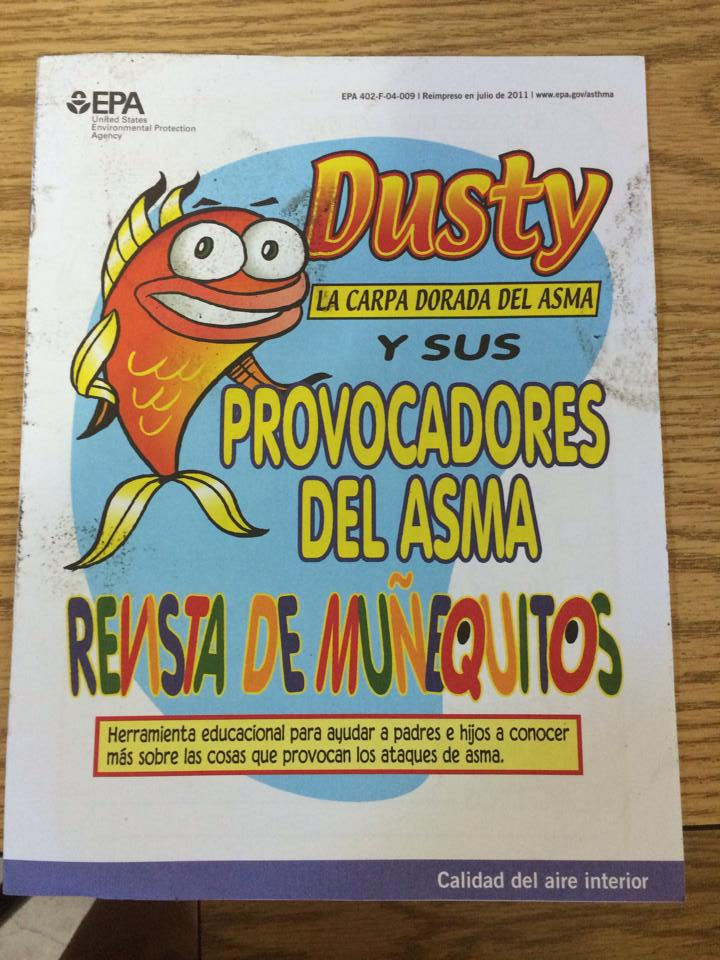
Asthma education coloring books.

The van at the community health fair where we helped physicians give recommendations and referrals with respect to individual blood pressure, BMI, and cholesterol levels.
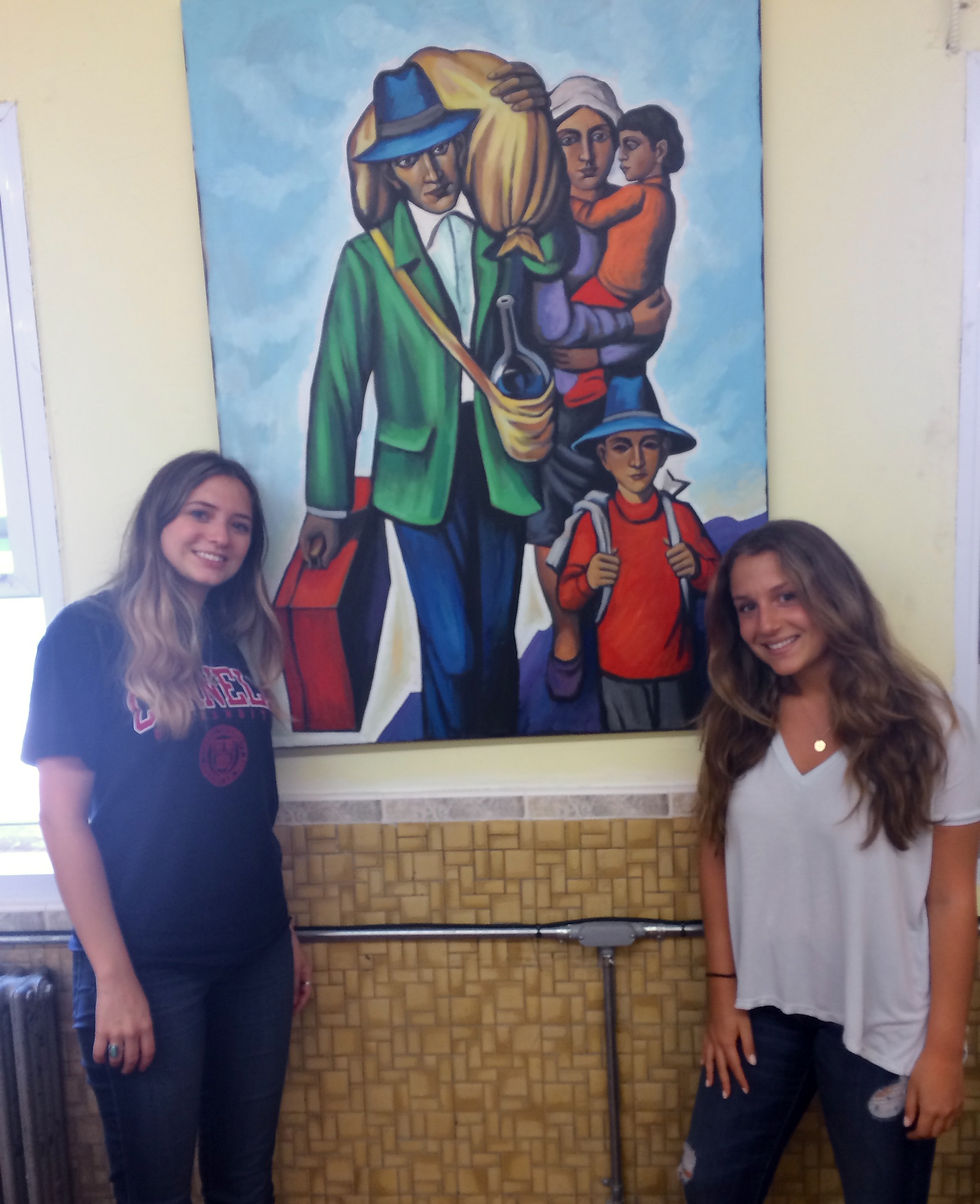
The Scalabrini Center for Migrant Families

At the Registration table for the community health fair.

Distributing health bulletins and nutrition literature at the community health fair.


The Healthy Kids/Healthy Homes Project
Volunteering for this project made me recognize the importance of helping families navigate the local social and legal systems in their respective communities. In this particular case, families in North Brooklyn are encouraged to develop the "voice" to file grievances against their landlords for noxious living conditions that contribute to child asthma. My work involved distributing flyers and educating the families at local day care centers, urging them to set up an appointment with the lawyers to start a case against their landlords to fix their living conditions (get rid of lead paint, mold, rats, etc.).
My work at the Buschwick United Head Start day care center was slow to develop and began with a lesson in self-reflection. I had an internal struggle about approaching families with flyers, embarrassed they experience these poor living conditions simply because they are minorities. I was afraid that they would be distrustful of the legal aspect of the program. However, the communal spirit that permeated the day care center made me feel very welcomed in an environment where I truly felt like an outsider (a non-Latino). I came to realize I needed to reciprocate the ease in which they welcomed me, and I grew more confident in handing out flyers and addressing their questions. I saw this as an act of reflection and re-design, where I readjusted my approach to the community action after reflecting on a peripheral experience of my own.
I left United Head Start day care with hope and affirmation that projects like Healthy Kids Healthy Homes have both a very practical cause and a plausible solution.
Working in asthma awareness and education also made me reflect on my shadowing experience at Lincoln. The studies discussed in Sze's "Noxious New York" that show how air pollutants are linked to low birth weights and skills in African American babies made me wonder if the far-below-average weights of some of the NICU patients could be attributed to the pollution in their environments, and not just to prenatal care and/or prematurity. I recognized that the health problems of low-income urban children begin even before birth, something the pediatric physicians at Lincoln Hospital already seemed to know but felt they could do little about. I was inspired to become a physician who felt they had the agency and resources to minimize the effects of environmental discrimination on my patient's health.
Community Health Fair
Scalabrini Center for Migrant Families
Having previously served as an ESL instructor to adult Latino immigrants, I was excited to see a different, legal perspective of the immigration experience. Reading through consultation files, I learned about the harsh reality of crossing the border, petitioning for family members, and applying for legal permanent residency and citizenship in the United States. I saw the values of a true leader in a co-director of the Center who is committed to ensuring affordable housing for immigrant families remains a priority in an increasingly gentrified North Brooklyn. She was a leader because she listened more than she spoke,
and extended her faith and support to unique projects when no one else would. She was, as Father Jim puts it, a servant to the population she was trying to help- much less than a dictator but more than a visionary.
I was exposed to the culture of an NPO, one that puts people first and profit last. The staff is diverse in their background and experience but share a common goal to help better the quality of life for the migrant families in NYC, whether it is through ESL classes or helping people file N-400s to apply for naturalization. I appreciated the value placed on the opinions and ideas of the volunteers who came from the same community they aim to serve. There was great transparency in the consultations with migrant families that kept the communication open and honest in a legal arena where there are many fears, myths and scams. The staff were not just legal advisers but also teachers and companions who worked to make sure the length and complexity of the legalization process is made clear. I found this to be analagous to the level of compassion and trust that must be developed between doctor and patient.
I now recognize the need for more advocates for a better immigration experience. Immigration is not a privilege that a country bestows but a human process that requires a better global policy approach. Within this global policy approach should be recognition of the basic human rights of immigrants, who are not “aliens” from a foreign outer space but real people with lived stories, passions, and families.

For me, the health fair was a true culmination of the values and practical knowledge we have absorbed via our rotations and community action projects this summer- agency, tenacity, professionalism, and leadership. I learned about the many moving parts, people, and processes that go into holding an organized health fair. We were able to successfully serve over 200 families at a convenient time and place, in the cafeteria of their church after Sunday mass. I was able to practice my medical Spanish in communicating with patients in the van as they presented their health problems and to encourage them to stop by the nutrition, asthma, cancer prevention, and health insurance application tables. It felt great to be able to put the abundant resources and information on health care and wellbeing into the hands of the people who need it most.
While working with the physicians in the health van, we found that we didn't discover the root of their health problems until we asked them personal questions, such as the kind of work they do to provide for their families. It turns out that much of their suffering could be attributed to the strenuous manual labor involving lifting heavy objects and working long hours, in construction and housekeeping especially. I learned about the value and power of dialogue and history taking, rather than exam and prescription writing, to help put patients at ease and take control of their own health. In turn, I recognized how medicine is as much about communication and the spoken word than it is about science. My time in the health van taught me that bodies are never merely physical objects to be fixed when they are ailing or broken, but private realities heavy with sociocultural meanings. In total, the brief interactions with community members in the health van taught me to have meaningful dialogue with the diverse communities and people in which I find myself a part, and to pull meaning from that dialogue.
